

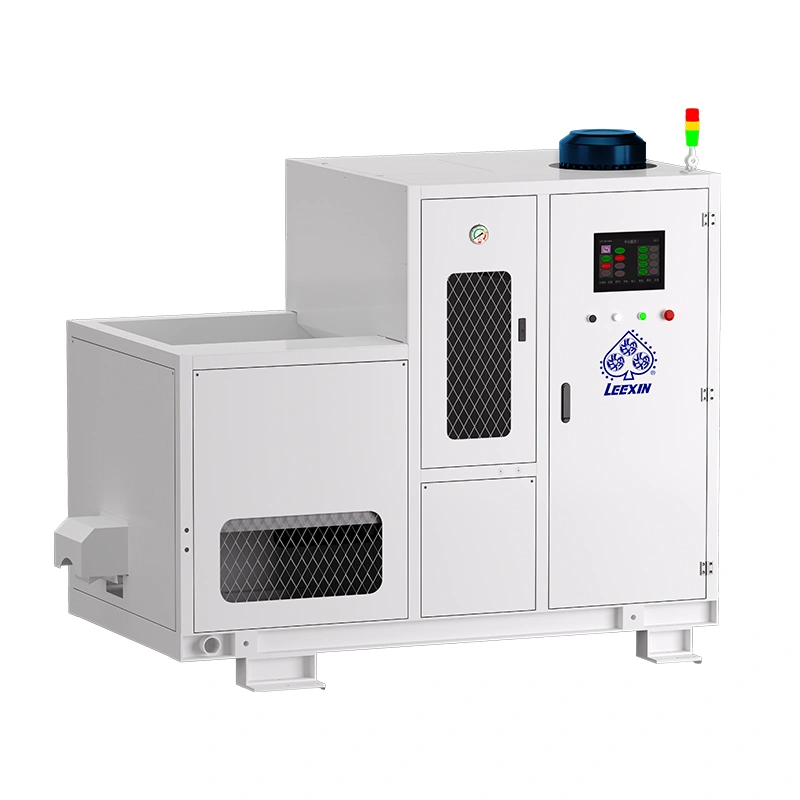
Introduction: The Need for Specialized Equipment
Titanium is a high-value metal widely used in aerospace, medical, automotive, and industrial applications due to its exceptional strength, light weight, and corrosion resistance. Machining titanium generates chips, shavings, powders, and sludge, which are valuable but challenging to handle.
While general briquetting machines can process common metals like iron or copper, titanium requires specialized design features to ensure safe, efficient, and cost-effective recycling. Understanding these differences is essential when selecting equipment.
High-Pressure Hydraulic System
Titanium is harder and less ductile than many common metals. This requires higher compression force to form dense, uniform briquettes.
Key differences include:
- Greater hydraulic pressure than standard machines
- Stable and precise pressure control
- Dense, oxidation-resistant briquettes
This ensures maximum material recovery and high-quality output.
Material-Specific Design
Titanium scrap often comes in fine chips or powders, which are prone to oxidation and handling difficulties. Titanium Briquetting Machines are designed with features such as:
- Enclosed compression chambers to minimize oxidation
- Special feed and discharge systems for fine powders
- Anti-clogging mechanisms for sticky or light materials
These design adjustments distinguish titanium machines from standard metal briquetters.
Safety Features for Reactive Materials
Titanium chips and powders can pose safety risks, such as fire hazards when mixed with other metals like magnesium.
A specialized Titanium Briquetting Machine includes:
- Fully enclosed processing to reduce dust and sparks
- Fire-resistant hydraulic components
- Controlled compression process for safer operation
Such safety measures are often unnecessary for common metals like iron or copper.
Efficient Handling of Cutting Fluids and Coolants
During machining, titanium scrap may contain cutting fluids. Unlike standard briquetters, titanium machines can:
- Separate oils and coolants effectively
- Allow recovery and reuse of fluids
- Reduce contamination and disposal costs
This capability supports cost-effective and environmentally friendly operations.
Automation and Customization
Titanium processing often requires consistent, high-quality output. Compared to generic machines, titanium briquetters may feature:
- Semi-automatic or fully automatic operation
- Programmable control systems for uniform briquette size
- Customizable compression settings for different titanium alloys
Automation and flexibility enhance efficiency, reduce labor costs, and ensure consistent performance.
High-Density Briquettes for Specialized Applications
Titanium briquettes must meet strict quality requirements for remelting or reuse in aerospace, medical, and industrial applications. Titanium Briquetting Machines produce:
- Dense, uniform briquettes with minimal voids
- High surface integrity to reduce oxidation
- Optimal size for melting furnaces or recycling lines
Standard briquetters may not achieve this level of density or quality for titanium.
About LEEXIN Hydraulic
LEEXIN Hydraulic is a professional manufacturer specializing in briquetting machines and energy-saving hydraulic systems. With over 20 years of experience, LEEXIN provides Titanium Briquetting Machines tailored to the unique requirements of high-value metals.
Our machines ensure safe, efficient, and high-quality processing of titanium scrap for aerospace, medical, automotive, and industrial applications.
Contact us to get a Titanium Briquetting Machine designed for your specific needs.
Conclusion
Titanium Briquetting Machines differ from standard briquetters in several critical ways:
- Higher hydraulic pressure for dense briquettes
- Material-specific design for fine chips and powders
- Enhanced safety features for reactive materials
- Efficient recovery of cutting fluids
- Automation and customization for consistent performance
- High-density output suitable for remelting and reuse
These features ensure maximum material recovery, cost savings, and operational safety, making titanium briquetters a specialized and essential solution for industries working with high-value titanium.
FAQ
Q1: How is a Titanium Briquetting Machine different from a standard briquetter?
It uses higher pressure, specialized design, and safety features for handling titanium chips and powders.
Q2: Can it process fine titanium powders?
Yes, it has enclosed chambers and anti-clogging mechanisms for fine or sticky materials.
Q3: Does it support cutting fluid recovery?
Yes, titanium machines can separate and allow reuse of fluids.
Q4: Is automation available for titanium machines?
Yes, semi-automatic and fully automatic models are available for consistent output.
Q5: Why is high briquette density important for titanium?
High-density briquettes reduce oxidation, improve handling, and are suitable for remelting and reuse.