

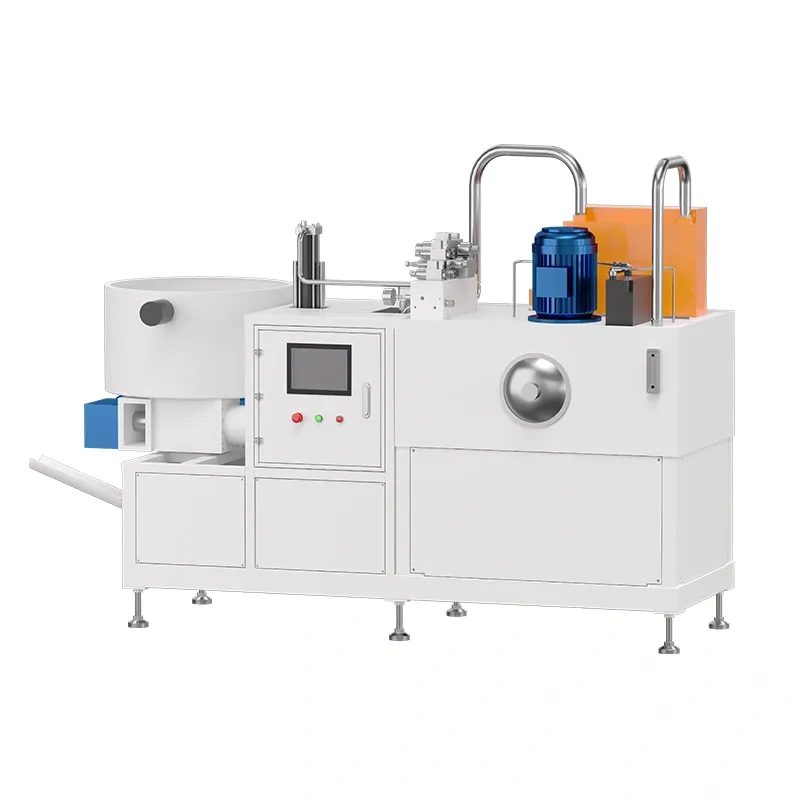
Introduction: Efficient Paper Waste Management
Printing, packaging, and paper manufacturing industries generate large amounts of paper waste every day. Loose paper waste can be bulky, difficult to store, and costly to transport. A Paper Briquetting Machine compresses paper-based materials into dense, uniform briquettes that are easier to handle, store, and recycle or use as fuel.
Understanding which types of paper waste can be processed ensures you select the right machine and maximize efficiency.
1. Office Paper and Printing Waste
- Includes discarded sheets, misprints, shredded documents, and paper trimmings.
- Briquetting converts loose sheets into dense blocks, reducing storage space and making transportation easier.
- Helps companies recycle office waste efficiently while maintaining clean production areas.
2. Cardboard and Packaging Waste
- Generated by packaging plants, logistics centers, and retail operations.
- Cardboard boxes, cartons, and packaging scraps can be compacted into briquettes.
- Briquetting reduces volume, lowers transport costs, and provides a uniform product suitable for recycling or fuel.
3. Pulp Residues and Paper Sludge
- Produced during paper manufacturing and recycling processes.
- Includes wet or dry pulp, sludge, and other residual materials.
- A Paper Briquetting Machine can handle these residues, producing dense briquettes that are easier to store, transport, and reuse in industrial processes.
4. Mixed Paper Waste
- Some facilities produce a mixture of office paper, cardboard, newspaper, and scrap paper.
- High-quality Paper Briquetting Machines can process mixed materials without compromising briquette quality.
- This versatility allows facilities to consolidate all paper waste efficiently.
5. Other Paper-Based Materials
- Paperboard, magazines, newspapers, and even thin carton residues.
- Briquetting transforms these materials into standardized blocks for recycling or fuel applications.
- Reduces landfill disposal and supports environmentally friendly operations.
About LEEXIN Hydraulic
LEEXIN Hydraulic specializes in Paper Briquetting Machines and energy-saving hydraulic systems. With over 20 years of experience, LEEXIN provides machines capable of processing:
- Office paper, printing waste, and cardboard
- Pulp residues and paper sludge
- Mixed paper scrap and paperboard
Our machines help facilities reduce storage and transportation challenges, improve recycling efficiency, and produce dense, reusable briquettes. We also offer installation, training, and maintenance support to ensure reliable performance.
Conclusion
A Paper Briquetting Machine can efficiently process a wide variety of paper-based waste, including:
- Office paper and printing residues
- Cardboard and packaging waste
- Pulp residues and paper sludge
- Mixed paper scrap
- Other paper-based materials
By converting loose paper waste into dense, uniform briquettes, facilities can:
- Save storage and transportation space
- Facilitate recycling and reuse
- Reduce disposal costs
- Support sustainable and environmentally friendly operations
Investing in a high-quality Paper Briquetting Machine ensures efficient, cost-effective, and eco-friendly paper waste management.
FAQ
Q1: Can office paper and printed sheets be briquetted?
Yes, loose office paper, misprints, and shredded documents can be compressed into dense briquettes.
Q2: Is cardboard suitable for briquetting?
Yes, cardboard boxes and packaging scraps can be processed efficiently.
Q3: Can paper pulp and sludge be processed?
Yes, machines can handle wet or dry pulp residues, forming dense briquettes.
Q4: Can mixed paper scrap be processed in one machine?
Yes, high-quality machines handle mixed paper types while producing uniform briquettes.
Q5: Does briquetting help reduce disposal costs?
Yes, it reduces volume, lowers transport costs, and enables recycling or fuel use.