

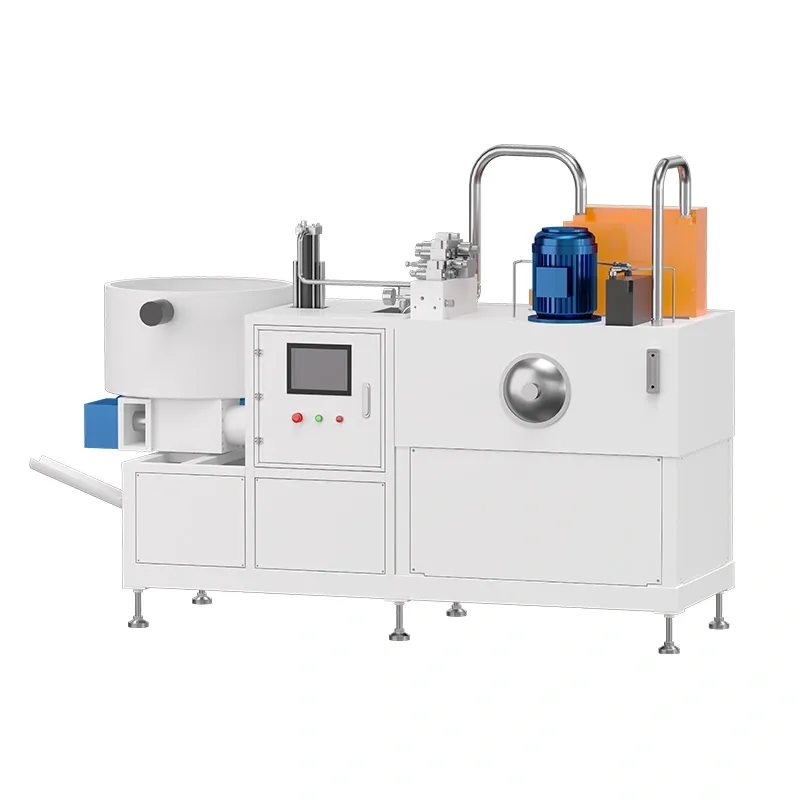
Introduction: Turning Paper Waste into Value
Paper and cardboard recycling is a critical part of sustainable operations for printing, packaging, and manufacturing industries. Loose paper waste is bulky, difficult to store, and often costly to transport. A Paper Briquetting Machine compresses paper, cardboard, and pulp residues into dense, uniform briquettes.
These briquettes are easier to handle, transport, store, and can serve as a reusable raw material for recycling or as fuel for industrial boilers.
How a Paper Briquetting Machine Works
Paper Briquetting Machines operate using mechanical or hydraulic pressure. The general process includes:
- Material Preparation: Paper waste, cardboard, and pulp residues are collected and shredded if needed. Moisture content is checked and adjusted to ensure proper compaction.
- Feeding: Prepared paper material is loaded into the machine hopper.
- Compression: Hydraulic or mechanical systems apply high pressure to compress the paper into dense briquettes.
- Briquette Formation: The compressed material exits the machine as uniform, solid briquettes. These blocks are easier to store, transport, and recycle.
The resulting briquettes reduce volume by up to 80% compared to loose paper waste and create a standardized product suitable for various applications.
Key Advantages of Paper Briquetting Machines
- Volume Reduction: Converts bulky paper waste into compact briquettes, saving storage space.
- Improved Handling: Uniform briquettes are easy to transport and stack.
- Environmental Benefits: Supports recycling, reduces landfill disposal, and promotes sustainability.
- Energy Recovery: Briquettes can be used as fuel in industrial boilers, reducing reliance on fossil fuels.
- Cost Efficiency: Reduces disposal costs and can generate value from waste materials.
About LEEXIN Hydraulic
LEEXIN Hydraulic specializes in Paper Briquetting Machines and energy-saving hydraulic systems. With over 20 years of experience, LEEXIN provides machines capable of processing:
- Paper waste from printing and packaging industries
- Cardboard and pulp residues
- Mixed paper scrap
Our machines help facilities reduce storage costs, minimize transportation challenges, and improve recycling efficiency. LEEXIN offers installation, operator training, and maintenance support to ensure reliable, long-term performance.
Conclusion
A Paper Briquetting Machine is an effective solution for converting loose paper and cardboard waste into dense, uniform briquettes. Benefits include:
- Efficient storage and transport
- Simplified handling and stacking
- Environmental and recycling advantages
- Potential for energy recovery
- Reduced operational costs
Investing in a high-quality Paper Briquetting Machine allows facilities to turn waste into value while promoting sustainable operations.
FAQ
Q1: What types of paper can be processed?
Paper waste, cardboard, pulp residues, and mixed paper scrap.
Q2: Can the briquettes be used as fuel?
Yes, they are suitable for industrial boilers and biomass energy applications.
Q3: How much volume reduction can be achieved?
Up to 80% compared to loose paper waste.
Q4: Is pre-shredding required?
Shredding helps with uniform briquette formation but depends on machine design.
Q5: How does briquetting help with recycling?
It produces uniform, dense blocks that are easier to transport, store, and feed into recycling processes.