

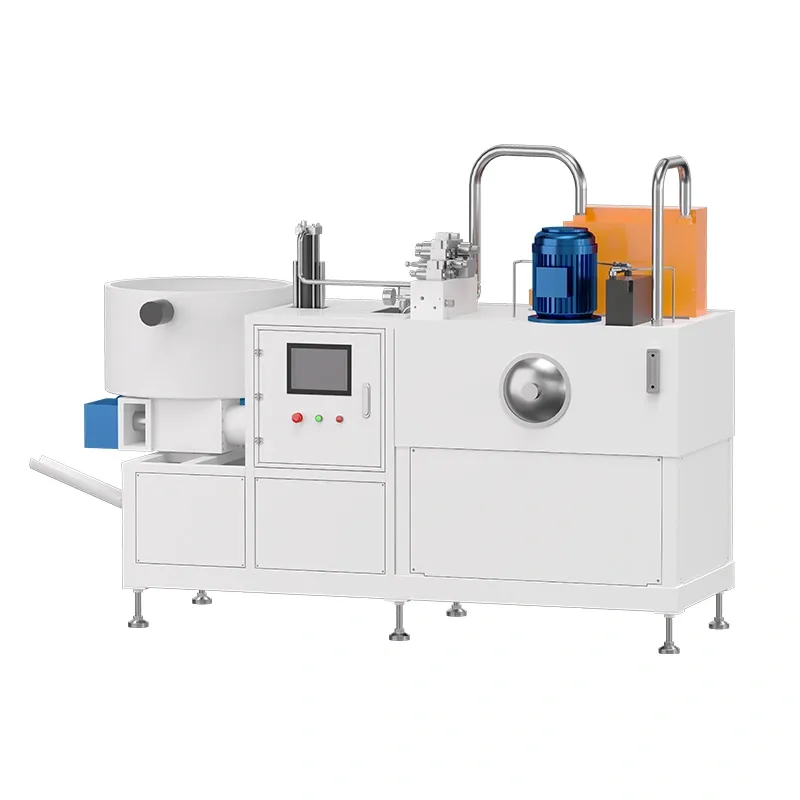
Paper waste is one of the most common byproducts in printing, packaging, office work, and manufacturing industries. Large quantities of shredded paper, cardboard, and pulp are often generated, creating challenges for storage, transportation, and recycling. A Paper Briquetting Machine provides an effective solution by compressing loose paper waste into dense briquettes, making it easier to handle, transport, and reuse for recycling or energy production.
This guide provides a detailed overview of paper briquetting technology, including its working principle, benefits, applications, and key considerations for selecting the right equipment. By understanding these aspects, businesses can optimize paper waste management, reduce costs, and support sustainable production practices.
1. Understanding Paper Waste and Its Challenges
Efficient paper waste management begins with understanding the types of paper waste and the challenges of handling them.
1.1 Types of Paper Waste
- Shredded office paper: From daily operations, document disposal, or shredding machines.
- Cardboard and corrugated sheets: Generated in packaging and logistics operations.
- Printing and pulp residues: Waste from bookbinding, printing presses, and paper mills.
- Low-grade offcuts: Trimmings or defective sheets from manufacturing.
1.2 Challenges of Loose Paper Waste
Loose paper waste has several operational and environmental drawbacks:
- Low bulk density, leading to high storage space requirements
- Difficult to transport efficiently due to volume
- Fire hazard risk due to flammability
- Limited value for recycling without pre-processing
A Paper Briquetting Machine addresses these challenges by compressing loose paper into uniform, compact briquettes, increasing storage efficiency and handling safety.
2. What Is a Paper Briquetting Machine?
A Paper Briquetting Machine is an industrial system designed to compress paper waste into dense, solid briquettes. It is widely used in offices, printing houses, paper mills, and recycling facilities. The machine’s key functions include:
- Compaction: Applying high pressure to compress loose paper.
- Briquette Formation: Producing uniform briquettes without binders.
- Moisture Management: Optional drying or dewatering to ensure stability and durability.
Briquettes generated by a Paper Briquetting Machine are clean, compact, and ready for recycling or energy recovery.
3. How a Paper Briquetting Machine Works
The operational workflow of a Paper Briquetting Machine is straightforward but crucial for achieving consistent results.
3.1 Feeding and Preprocessing
Paper waste is collected and, if necessary, shredded into smaller, uniform pieces. Moisture content should be controlled to ensure proper briquette formation.
3.2 Compression
The shredded paper is fed into the briquetting chamber. Hydraulic or mechanical systems apply high pressure, compressing the paper into a dense, uniform briquette. This process may generate heat, which naturally binds the fibers together.
3.3 Briquette Discharge
Once compressed, the finished briquettes are ejected automatically or manually. The briquettes are uniform in size, easy to handle, and suitable for storage, transport, or further recycling.
A well-designed Paper Briquetting Machine ensures high-density briquettes that maintain shape and integrity, maximizing storage efficiency.
4. Advantages of Using a Paper Briquetting Machine
Investing in paper briquetting technology brings multiple operational, economic, and environmental benefits.
4.1 Space and Volume Reduction
Briquetting reduces loose paper volume by up to 80–90%, saving significant warehouse space.
4.2 Improved Transport Efficiency
Compact briquettes are easier and safer to transport compared to loose paper waste.
4.3 Enhanced Recycling Efficiency
Briquettes are preferred by recycling facilities due to their uniform size, density, and ease of handling.
4.4 Workplace Safety
Reducing loose paper piles minimizes fire hazards and clutter, improving operational safety.
4.5 Sustainability and Environmental Impact
Briquetting supports circular recycling and reduces waste sent to landfills. It also lowers carbon footprint by maximizing paper reuse.
A Paper Briquetting Machine transforms paper waste into a valuable and manageable resource.
5. Industrial Applications
Paper briquetting machines are suitable for various sectors where paper waste is abundant.
5.1 Printing and Publishing
Printing houses generate large volumes of pulp, trimmings, and defective sheets, which can be efficiently briquetted.
5.2 Packaging Industry
Cardboard and packaging waste can be compacted into briquettes for recycling or energy recovery.
5.3 Office and Administrative Facilities
Shredded office documents and confidential paper waste can be compressed for safe storage and disposal.
5.4 Paper Mills
Residual pulp and low-grade paper offcuts are briquetted to improve recycling efficiency and reduce disposal costs.
6. Key Considerations for Selecting a Paper Briquetting Machine
Selecting the right briquetting machine is essential for consistent quality and long-term performance.
6.1 Compression Pressure
Adequate pressure ensures dense and stable briquettes suitable for storage, transport, or energy use.
6.2 Machine Capacity
The machine’s throughput should match daily paper waste generation volumes.
6.3 Moisture Control
Proper moisture content ensures high-quality briquettes without crumbling or deformation.
6.4 Automation and Integration
Machines can be integrated with shredders, conveyors, and drying systems for efficient operation.
6.5 Energy Efficiency
Hydraulic and mechanical systems should optimize energy consumption to reduce operational costs.
A well-selected Paper Briquetting Machine maximizes waste management efficiency and return on investment.
7. Operational Best Practices
To achieve optimal performance:
- Pre-shred paper waste to uniform sizes
- Maintain hydraulic or mechanical components regularly
- Monitor moisture content and adjust as needed
- Train operators in safe handling and machine maintenance
- Store briquettes in a dry area to prevent moisture absorption
Following these best practices ensures consistent briquette quality and machine longevity.
8. Environmental and Sustainability Benefits
Briquetting paper waste supports sustainable operations:
- Reduced landfill waste: Less loose paper goes to disposal
- Efficient recycling: Briquettes improve handling and processing efficiency
- Energy recovery: Briquettes can serve as biomass fuel for boilers or energy plants
- Cleaner production: Reduces dust, clutter, and fire risks in facilities
A Paper Briquetting Machine is a key tool for sustainable paper waste management.
9. Future Trends in Paper Briquetting Technology
As industries move toward smarter, sustainable operations, paper briquetting technology is evolving:
- Automated feeding and discharge systems
- Real-time monitoring of pressure and moisture
- Integration with digital factory systems
- Custom briquette sizes for different recycling or energy applications
Modern Paper Briquetting Machines are increasingly viewed as strategic assets in waste management and circular economy practices.
10. Partnering With a Trusted Manufacturer
The reliability and performance of a briquetting system depend on engineering expertise and customization capability. LEEXIN Hydraulic Machinery provides advanced Paper Briquetting Machine solutions, designed for high-density compression, consistent briquette quality, and efficient operation. With decades of experience in hydraulic intelligent manufacturing and customized briquetting systems, LEEXIN helps businesses reduce waste, improve recycling efficiency, and achieve sustainable production goals.